
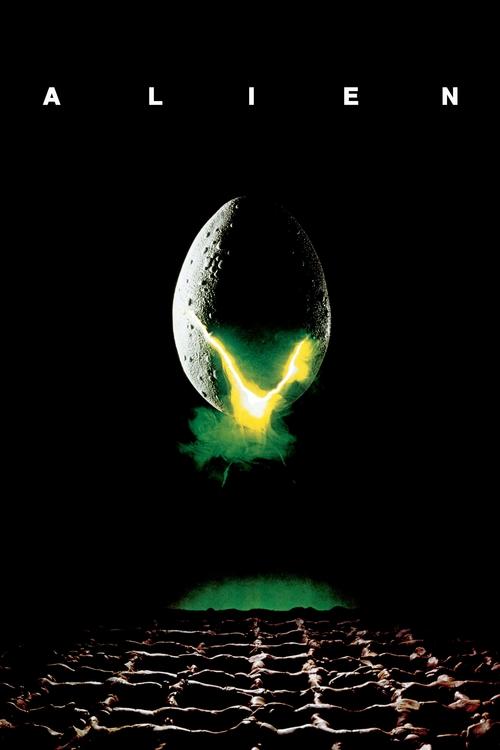
Before franchises became cinematic real estate portfolios, there was Alien—a film so ruthlessly efficient it practically redefined what science fiction horror could be.
Directed by Ridley Scott, written by Dan O’Bannon, and designed into nightmare immortality by H. R. Giger, Alien is less a movie and more a slow suffocation.
And it is exquisite.
Blue-Collar Space
The genius of Alien isn’t just the creature—it’s the people. The crew of the Nostromo aren’t heroic explorers; they’re space truckers arguing about bonuses. The future isn’t sleek and optimistic. It’s industrial, greasy, and corporate-owned.
When the distress signal diverts them to a desolate planetoid, the film moves with quiet, patient dread. No bombast. No orchestral hysteria. Just corridors, blinking lights, and the creeping suspicion that something has gone very wrong.

The Chestburster: Cinema’s Most Violent Dinner Party
Let’s address the scene. You know the one. The chestburster sequence remains one of the most shocking moments in film history—not because of the gore, but because of the escalation. Scott builds tension like a sadist with architectural training.
The horror is sudden, intimate, biological. It’s body horror before the term was fashionable.
And then the movie does something even smarter—it hides the monster.
Fear of the Unseen
The Xenomorph—sleek, biomechanical, disturbingly elegant—is terrifying precisely because we rarely see it clearly. Giger’s design feels ancient and alien in a way most sci-fi creatures don’t. It isn’t roaring or posturing. It’s hunting.
Scott shoots it like a shark in air ducts. Glimpses. Movement. Suggestion. The imagination does the rest, and the imagination is cruel.
The Emergence of Ripley
And then there’s Sigourney Weaver as Ellen Ripley. Not introduced as the obvious protagonist. Not framed as an action hero. She earns survival the hard way—through caution, intelligence, and an unwillingness to ignore protocol.

Ripley doesn’t triumph because she’s fearless. She triumphs because she pays attention. It’s a refreshingly adult approach to heroism.
Corporate Horror
If the alien is the monster, the company is the accomplice. The cold indifference of Weyland-Yutani adds a layer of existential dread that elevates the film beyond slasher-in-space. The horror isn’t just physical annihilation—it’s expendability.
You are cargo. The organism is more valuable.
Sleep well.
The Verdict
Alien is lean, patient, and merciless. It doesn’t rush. It doesn’t explain more than necessary. It trusts atmosphere over spectacle and tension over noise.
It’s not just one of the greatest sci-fi horror films ever made. It’s one of the greatest horror films, period.
Rating: 5 out of 5 motion trackers.
Forty-plus years later, it still feels cold, industrial, and terrifyingly plausible. The airlock closes. The alarm sounds. And somewhere in the dark, something is waiting.
Leave a Reply