
Alien invasion movies usually arrive with spectacle.
The Darkest Hour arrives with a flicker.
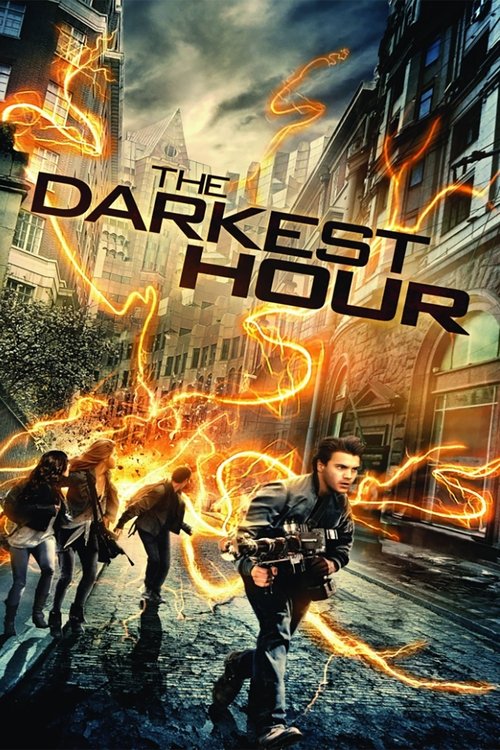
Directed by Chris Gorak (a production designer making his second feature after Right at Your Door), the 2011 sci-fi thriller relocates the extraterrestrial threat to Moscow and gives us invaders made of near-invisible electrical energy.
It’s an intriguing idea. Execution is another matter.
The Concept: Predator as Power Surge

The aliens here are mostly unseen—flickering distortions that disintegrate humans into drifting ash. The invisibility gimmick initially works; there’s tension in not knowing where danger stands.
But tension requires escalation. And The Darkest Hour struggles to build momentum beyond its premise.
The creatures are visually abstract, which limits their menace. It’s difficult to fear what feels like a special effect rather than a presence.
Emile Hirsch in Survival Mode
Emile Hirsch plays an American tech entrepreneur stranded in Russia when the invasion begins. Hirsch, capable of raw intensity in films like Into the Wild, here operates in standard survival-thriller mode.
There’s urgency. There’s shouting. There’s not much depth.

Opposite him, Olivia Thirlby brings grounded calm, but the screenplay gives her little beyond reaction and resilience.
The characters exist primarily as motion.
Moscow as Wasted Opportunity
Setting the invasion in Moscow offers fresh visual geography—Red Square emptied of life, landmarks stripped of context. There’s potential in shifting the typical American-centric disaster narrative.

Yet the film rarely explores cultural specificity. Moscow becomes backdrop rather than character.
It’s global in location, generic in execution.
Chris Gorak’s Visual Eye
Gorak’s background in production design is evident in the film’s polished aesthetic. There’s an appealing starkness to the empty cityscapes. The ash disintegration effect is clean and chilling.
But style can’t compensate for thin narrative stakes.
Unlike the claustrophobic immediacy of Right at Your Door, Gorak seems more comfortable staging images than building suspense arcs.
The 3D Era Artifact
Released during the brief post-Avatar 3D boom, The Darkest Hour was marketed heavily around immersive effects. That emphasis is visible—objects fly, energy pulses, perspective shifts.
It feels like a film designed for format first, storytelling second.
The Verdict
The Darkest Hour offers a compelling invasion concept and some striking visuals, but it never fully capitalizes on either. It’s watchable, occasionally tense, and ultimately forgettable.
Rating: 2.5 out of 5 flickering silhouettes.
A strong idea.
A faint execution.
Leave a Reply