

Superheroes usually follow a rigid, expensive set of rules. You need a tragic backstory involving high-end jewelry or a radioactive lab accident. You need a jawline that can cut glass. Most importantly, you need a budget that exceeds the GDP of a small island nation.
Then there is Darryl Walker.
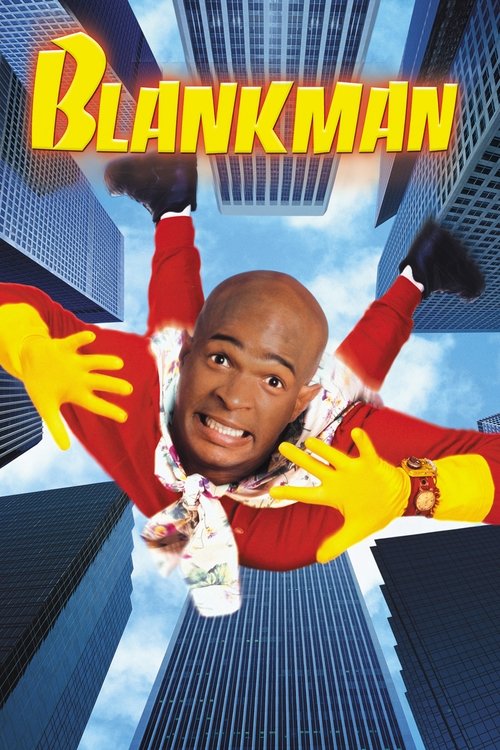
Darryl doesn’t have a high-tech suit or a billionaire’s trust fund. He has a bulletproof overcoat treated with a secret chemical formula and a pair of red long johns. Released in 1994, Blankman arrived at a strange crossroads in cinema history. The Tim Burton Batman era was fading into the neon-soaked camp of Joel Schumacher, and the concept of a “superhero parody” was barely a whisper in the cultural consciousness. It’s an intriguing artifact. It’s a DIY project that got out of hand. It’s arguably one of the most polarizing film reviews you’ll ever have to sit through.
The Blueprint: Building a Hero from Literal Scraps
The premise is deceptively simple, echoing the earnest silliness of the 1966 Batman television series. Darryl Walker (Damon Wayans) is a brilliant, socially stunted tinkerer living in the inner city. When his grandmother is murdered in a Mafia-related hit, Darryl decides that the police are insufficient. He becomes Blankman.
He doesn’t have super-strength. He has a room full of “sentient” junk. He has a robot named J-5 made out of a washing machine and a toaster. He has a “Blank-Station” located in an abandoned subway terminal. It’s less The Dark Knight and more MacGyver on a severe budget.
The film operates on a frequency of pure, unadulterated absurdity. It trades in the high-octane spectacle we now associate with Marvel for something much grittier: and significantly stickier. Darryl’s gadgets don’t always work. His hero pose is often interrupted by a sneeze or a social faux pas. It’s a deconstruction of the genre that predates the “realistic” superhero trend by at least a decade. It’s messy. It’s loud. It’s unapologetically weird.

The Wayans Effect: Elasticity as a Superpower
To understand Blankman, you have to understand the 1990s dominance of the Wayans family. This was the era of In Living Color, a time when Damon Wayans was the undisputed king of physical comedy and high-concept characters. In Blankman, Wayans isn’t just playing a hero; he’s playing a character who feels like he wandered off the set of a sketch comedy show and into a feature-length narrative.
Darryl Walker is a performance of high-register squeaks and frantic gestures. Modern retrospective cult classic movie reviews have often pointed out that Darryl exhibits many traits now associated with the autism spectrum: his hyper-fixation on gadgets, his difficulty with social cues, and his repetitive vocalizations. Whether this was intentional or just Wayans leaning into “dork” tropes of the era is debatable, but it gives the character a layer of sincerity that saves the film from being a total farce.
He is vulnerable. He is earnest. He is, in his own way, deeply heroic. He isn’t trying to be cool. He’s trying to be good. In an era where heroes were defined by their leather jackets and brooding stares, Darryl Walker was a refreshing, albeit exhausting, alternative.
Sidekicks and Cynicism: The David Alan Grier Factor
Every eccentric hero needs a grounded foil, and David Alan Grier provides the perfect anchor as Darryl’s brother, Kevin. Kevin is the voice of the audience. He is tired. He is skeptical. He is embarrassed by his brother’s antics: right up until he puts on a mask and becomes “Other Guy.”
The chemistry between Wayans and Grier is the engine of the film. While Darryl lives in a comic book fantasy, Kevin lives in the reality of 90s urban decay. The tension between Darryl’s optimism and Kevin’s cynicism is where the film finds its heart. Their relationship feels authentic, even when they are fighting crime in homemade costumes. It’s a brotherly dynamic that grounds the fantastical elements in something recognizable.
There’s a manic energy to the comedy that doesn’t always land. For every clever subversion of a superhero trope, there are three jokes about bodily functions or Darryl’s lack of social grace. It’s a 90-minute film that often feels like a 10-minute sketch stretched to its breaking point. If you aren’t a fan of the Wayans’ brand of high-decibel humor, Blankman is a tough sell. It’s relentless. It’s vibrating with a need to be funny.
A Genre Before Its Time: Deconstruction in Long Underwear
In 1994, people weren’t tired of superhero tropes because those tropes hadn’t become a cultural monopoly yet. Blankman was satirizing a genre that hadn’t even reached its final form. It mocks the “superhero landing” before it had a name. It pokes fun at the absurdity of a secret identity when everyone in the neighborhood clearly knows who you are.
Looking back, it serves as a proto-Kick-Ass or a sillier Mystery Men. It asks: what if a regular person tried to do this? The answer is usually that they would get shot, which is why Darryl spends so much time perfecting his bulletproof spray. There is a genuine tension in the action scenes because Darryl is so physically fragile. When he gets into a fight, you don’t expect him to win through martial arts mastery; you expect him to win because he built a jet pack out of a vacuum cleaner.
The film’s villain, Minelli (played with standard mobster gravel by Jon Polito), belongs in a different movie entirely. He represents the “real” world: violent, greedy, and utterly confused by the man in the red long johns. This juxtaposition is where the smartest movie reviews of the time found merit. It’s the collision of a Saturday morning cartoon and a gritty crime drama.
The 90s Aesthetic: Flannel, Mobsters, and Robin Givens
The visual language of Blankman is pure 90s. The lighting is harsh. The sets are dusty. The fashion is a collection of oversized suits and unfortunate headwear. Robin Givens plays Kimberly Jonz, the intrepid reporter who becomes Blankman’s love interest. She plays it remarkably straight, which only adds to the absurdity. Seeing a glamorous news anchor fall for a man who lives in a subway station and talks to a toaster is the ultimate 90s comedy trope.
The film captures a specific moment in urban cinema. It deals with neighborhood crime and corrupt mayors, but through a lens of slapstick. It’s a film that couldn’t exist today: not because the humor is too edgy, but because it’s too earnest. Modern parodies are draped in layers of irony. Blankman is just… Blankman. It wears its ridiculousness on its sleeve, literally.
The Verdict: Hidden Gem or Hazardous Waste?
Is Blankman a masterpiece? Absolutely not. It is structurally messy, the pacing is erratic, and the humor is an acquired taste that many people never actually acquired. But as a cult classic movie review subject, it’s fascinating.
It represents a time when a major studio would give a comedian a budget to build a superhero world out of literal trash. It represents a rare instance of Black superhero representation in an era where the genre was almost exclusively white. It’s a film that has gained a second life on home video and streaming, finding an audience that appreciates its DIY spirit and Damon Wayans’ commitment to the bit.
It’s about a man who refuses to accept the world as it is. Which is less “inspirational” than it sounds when you realize he’s wearing a colander on his head.
Blankman remains a curiosity. It’s a film that is either a hilarious satire of a burgeoning genre or a grating exercise in physical comedy, depending entirely on your tolerance for squeaky voices. It’s the hero we didn’t know we needed. And thirty years later, we’re still not quite sure if we actually want him back.
It’s silly. It’s sweaty. It’s weirdly sincere.
If you’re looking for more deep dives into the weird corners of cinema history, check out our other reviews at EL FILM CRITIC.
Leave a Reply