
Zombie movies used to shuffle.
28 Days Later made them sprint—and horror hasn’t quite caught its breath since.
Directed by Danny Boyle and written by Alex Garland, the 2002 film redefined post-apocalyptic dread with a simple tweak: the infected aren’t undead. They’re furious.
And they’re fast.
The Image That Launched a Thousand Nightmares

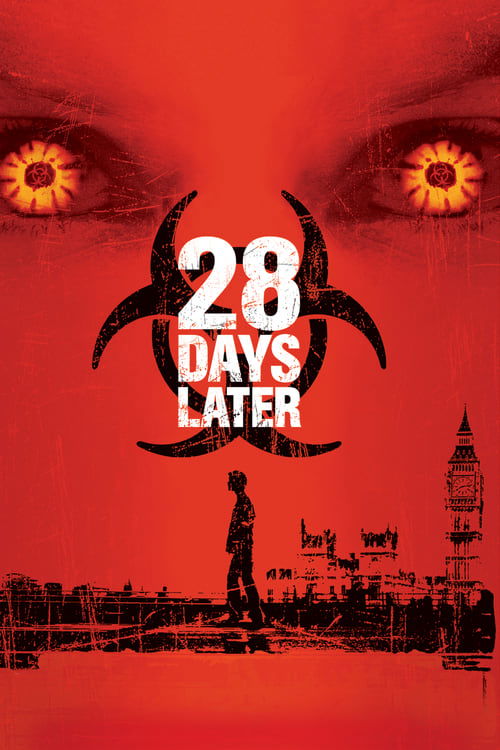
The opening—Cillian Murphy wandering a deserted London after waking from a coma—remains one of modern horror’s most indelible sequences. Shot on early digital video, the empty city feels uncanny, almost documentary-like.
Landmarks usually crowded with life sit abandoned. It’s not spectacle—it’s silence.
The apocalypse here isn’t explosive. It’s already happened.
Rage as Virus
The “Rage” virus spreads in seconds, transforming people into shrieking, blood-flecked conduits of violence. Boyle shoots attacks with jittery urgency, amplifying the sense that civilization collapsed not gradually—but instantly.
The infected aren’t romanticized. They’re not tragic figures. They’re pure impulse.
The real horror, however, isn’t the virus.
Humanity Under Pressure
As Jim joins fellow survivors—played by Naomie Harris, Brendan Gleeson, and later a group of soldiers—the film pivots from survival thriller to moral study.

Garland’s script makes an uncomfortable suggestion: remove infrastructure, and the infected may not be the only ones driven by rage. Authority fractures. Protection becomes possession.
The film’s third act deliberately shifts tone, challenging audience expectations of safe havens and heroic rescues.
Style Over Gloss
The grainy digital cinematography, often criticized at the time, now feels integral to the film’s identity. It’s raw. Immediate. Slightly abrasive. The aesthetic reinforces instability.
And John Murphy’s escalating score—particularly in the final stretch—turns dread into operatic tension.
The Verdict
28 Days Later isn’t just a zombie film. It’s a reinvention of the genre—urgent, political, and emotionally jagged. It understands that apocalypse stories work best when the monsters look disturbingly familiar.
Rating: 5 out of 5 empty streets.
Not about the end of the world. About what’s left when it ends.
Leave a Reply