
Biopics about geniuses usually come with chalk dust and triumph. A Beautiful Mind adds paranoia, heartbreak, and a twist that launched a thousand gasps in 2001 multiplexes.
Directed by Ron Howard, the film chronicles the life of mathematician John Nash, from his socially awkward Princeton days to his battle with schizophrenia and eventual Nobel Prize recognition.
It’s prestige cinema in its purest early-2000s form—polished, earnest, and emotionally direct.

Russell Crowe: Brilliance With Edges
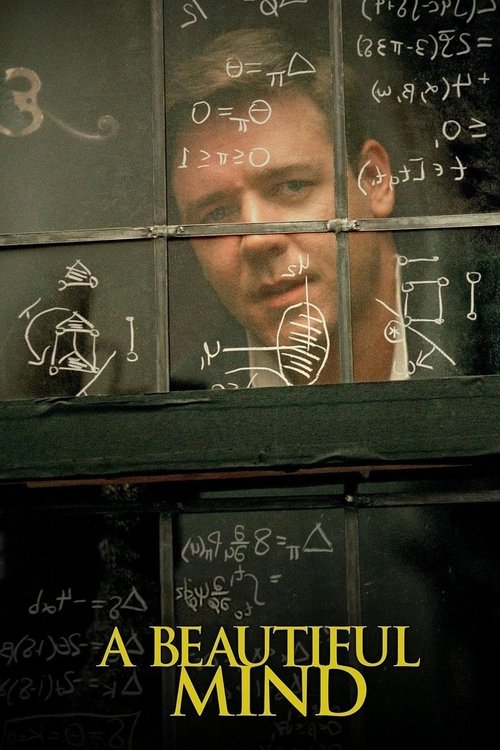
Russell Crowe plays Nash with a brittle intensity that slowly fractures. Early scenes frame him as the archetypal brilliant outsider—aloof, dismissive, obsessively chasing originality.
Crowe avoids caricature, grounding Nash’s brilliance in insecurity. When the film pivots into delusion, the performance doesn’t suddenly spike—it deepens. The paranoia seeps in gradually, making the reveal both shocking and, in retrospect, inevitable.
It’s not subtle filmmaking, but it is controlled.
Jennifer Connelly: The Emotional Anchor
The film’s quiet MVP is Jennifer Connelly as Alicia Nash. Where Crowe’s performance oscillates between intellect and instability, Connelly provides steady emotional gravity.
Her role risks being reduced to “supportive spouse,” but Connelly infuses Alicia with resilience and exhaustion in equal measure. The marriage becomes the film’s core—not genius, not equations, but partnership under strain.
The Twist and the Technique
Howard structures the narrative so the audience experiences Nash’s delusions alongside him. Characters appear, missions unfold, conspiracy boards fill walls—until reality intervenes.
It’s a clever device, though one that simplifies aspects of Nash’s real-life experience. The film opts for narrative cohesion over clinical complexity, smoothing rough edges for dramatic clarity.
That choice has drawn criticism. But as cinema, it works.
Prestige and Poise
Visually, the film leans into warm lighting and classical composition. James Horner’s score swells with emotional assurance. It’s the kind of movie that knows it’s headed for awards season—and dresses accordingly.
And indeed, it won Best Picture, along with three other Oscars.
The Verdict
A Beautiful Mind is heartfelt, accessible, and anchored by strong performances from Crowe and Connelly. It may streamline history and romanticize resilience, but it never loses sight of the human cost behind intellectual achievement.
Rating: 4 out of 5 chalkboards.
A reminder that genius isn’t just about seeing patterns no one else can. It’s about learning which ones are real—and finding the strength to live with them.
Leave a Reply