
Remakes usually arrive with an apology baked into the marketing. We know you loved the original, but hear us out. Edgar Wright’s The Running Man skips the apologetics entirely. This isn’t a remake of the 1987 Schwarzenegger vehicle: the one with spandex game show hosts and one-liners that land like sledgehammers. It’s a do-over. A return to Stephen King’s 1982 novel (written under his Richard Bachman pseudonym), back before Arnold turned dystopian satire into an excuse for fireworks and bicep flexography.
Wright’s version is leaner. Meaner, in theory. More interested in dread than detonations.
Whether that makes it the adaptation we “deserved” is another matter entirely.

What You’re Actually Getting
Ben Richards (Glen Powell) is a desperate man in a desperate America. The economy has collapsed into something resembling a game show format. The Network runs everything. If you need money: and Richards needs money, because his daughter is dying: you volunteer to be hunted. Live on television. Across real American cities. By professional Hunters with corporate sponsorships and action figure deals.
It’s about complicity. About how spectacle numbs a population into accepting atrocity as entertainment. Which is less subtle than it sounds, but King wasn’t writing allegory: he was writing a pulpy thriller that happened to contain a diagnosis of late-stage capitalism. Wright keeps that edge. The film opens with Richards watching his sick daughter in a crumbling Boston, then cuts to Network executives debating the season’s “talent.” The tonal whiplash is intentional. You’re meant to feel the cognitive dissonance.
The world-building here is dustier than Wright’s usual playgrounds (long before the candy-colored chaos of Scott Pilgrim or the meticulous genre pastiche of the Cornetto Trilogy). The palette is concrete gray and fluorescent buzz. Production designer Marcus Rowland gives us a retro-futurist America that feels like 1982’s idea of 2025: which, conveniently, is almost exactly when this film arrives. The irony isn’t lost.
Glen Powell, Running
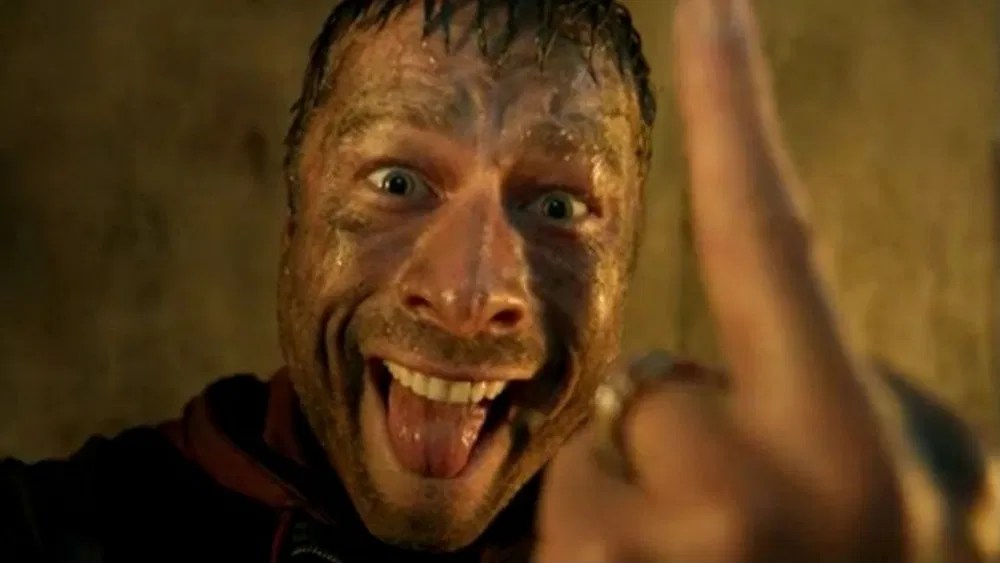
Powell has spent the last few years becoming Hollywood’s go-to for charming competence. He smirks through Top Gun: Maverick. He out-rom-coms the competition in Anyone But You. Here, Wright strips that charm down to survival instinct and fraying desperation. Richards isn’t a hero. He’s a man who volunteered to die on camera because the alternative was watching his daughter die off it.
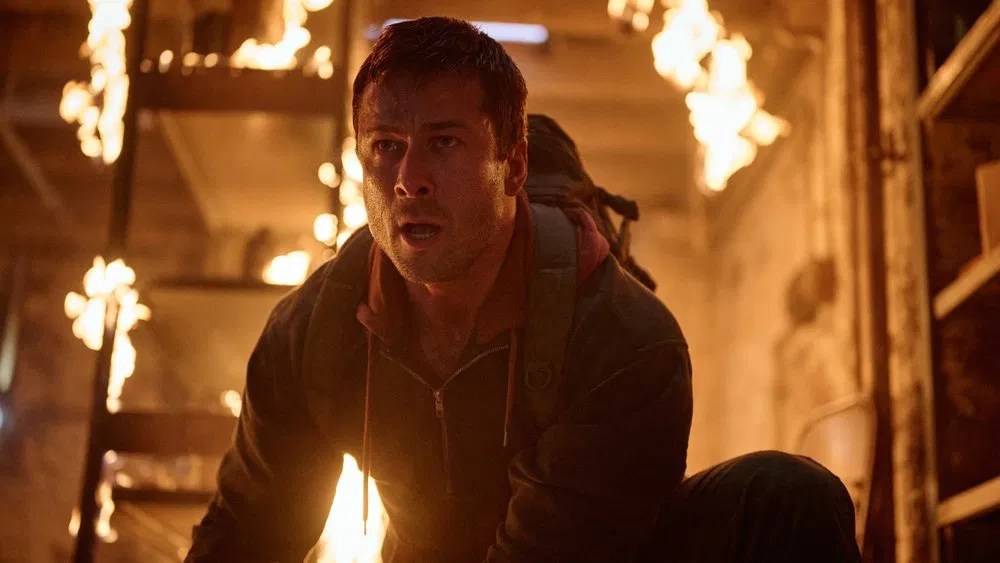
Powell sells the exhaustion. He’s good at playing someone barely holding it together: jaw clenched, eyes scanning for exits, moving like the ground might collapse. There’s a sequence mid-film where Richards navigates a Detroit surveillance grid, every camera in the city tracking his heat signature, and Powell makes you feel the paranoia crawling up his spine. It’s a physical performance. Not a lot of quips. Not much time for the megawatt smile.
Which is exactly what the role needed.
The supporting cast orbits Richards without overwhelming him. The Hunters: led by a coldly efficient Evan Killton (Josh Brolin, playing the role like middle management with a gun): are less cartoonish than their ’87 counterparts, but also less memorable. Brolin brings bureaucratic menace instead of personality. It works for the film’s tone. It doesn’t give you much to chew on afterward.
Edgar Wright Without the Edgar Wright-ness
Here’s the thing about hiring Edgar Wright: you expect a certain level of kinetic visual wit. Whip pans. Rapid-fire editing synced to needle drops. Characters moving through space like the camera is choreographing a dance. Wright built his reputation on making genre films that vibrate with stylistic energy.
The Running Man is more restrained. Deliberately so.
Wright trades his usual bag of tricks for sustained tension. The action sequences are brutal and efficient: no slow-motion heroics, no comedic timing undercutting the violence. When Richards fights, it’s messy. Desperate. The camera stays handheld and claustrophobic. You feel every impact. It’s closer to the Safdie Brothers’ Uncut Gems than Baby Driver. Wright proves he can modulate. He can pull back.
But you miss the playfulness.

There are flashes of vintage Wright: a montage of Richards preparing for the Games, cutting between Network promos and his daughter’s hospital room, scored to a distorted cover of “Everybody Wants to Rule the World.” It’s sharp. Satirical. Over in ninety seconds. The rest of the film settles into a grimmer rhythm. Long stretches of Richards running through urban decay, punctuated by violence that doesn’t feel triumphant. Just necessary.
It’s a choice. Whether it’s the right choice depends on what you wanted from an Edgar Wright thriller.
Fidelity vs. Spectacle
Stephen King gave his approval. That matters, especially considering King’s relationship with adaptations of his work ranges from Stanley Kubrick’s The Shining (which he famously loathes) to Frank Darabont’s The Shawshank Redemption (which he adores). King read Wright’s script. He called it a “bipartisan thrill ride.” He appreciated that Wright returned to the novel’s core concept: a man hunted in the real world, not a soundstage game show arena.
The 1987 version, directed by Paul Michael Glaser, turned King’s story into a neon-soaked action comedy. Schwarzenegger cracked one-liners while dispatching theme-park villains. It was entertaining. It was also about as faithful to King’s novel as Starship Troopers was to Heinlein’s book: which is to say, it kept the title and ditched the text.
Wright’s version is a corrective. It’s darker, more cynical, more interested in the mechanics of authoritarian control disguised as entertainment. The Network isn’t just evil: it’s banal. Corporate. The Hunters aren’t freaks; they’re employees with quotas. The spectacle isn’t fun; it’s numbing.
Which makes for a more intellectually honest adaptation. It also makes for a less viscerally exciting film.
Where It Stumbles
The pacing sags in the second act. Once the Games begin, the film settles into a repetitive structure: Richards runs, the Hunters close in, a confrontation erupts, Richards escapes. Repeat. Wright stages each sequence with skill, but the narrative momentum stalls. We understand the stakes. We see Richards struggling. But the film doesn’t deepen those stakes or complicate his journey in surprising ways.
There’s also the tonal tightrope Wright attempts: balancing satirical edge with genuine dread: and he doesn’t always stick the landing. Some scenes want to be blackly comic (a Network executive taste-testing new Hunter personas like ice cream flavors), while others aim for raw desperation (Richards bargaining for his daughter’s medication). The shifts don’t always cohere. You’re never quite sure if you’re watching a thriller with satirical flourishes or a satire with thriller mechanics.
The ending (no spoilers) pivots hard into King’s bleaker impulses. It’s bold. It will frustrate anyone expecting catharsis. It’s also the most honest ending this story could have, given its premise. Wright doesn’t blink. He doesn’t soften the blow. Whether audiences will appreciate that unflinching commitment is questionable, based on the film’s underwhelming box office performance: $68.6 million worldwide against a $110 million budget.
Turns out, faithfulness to grim source material doesn’t always translate to commercial success. Who knew.
The Verdict (Such As It Is)
Is this the remake we deserved? That presumes we deserved a remake at all, which is debatable. What Wright delivers is a competent, occasionally gripping adaptation that honors King’s novel while demonstrating the director’s range beyond his trademark style. It’s less inventive than Baby Driver. Less fun than Hot Fuzz. More thematically consistent than either.
Glen Powell proves he can carry a film on sheer intensity. The world-building is convincing. The satire has teeth, even if it occasionally bites its own tongue. Wright shows he can do grim and restrained, which is admirable. Whether grim and restrained is what we wanted from Edgar Wright is the real question.
The film exists in an odd middle ground: too faithful to the novel to be a crowd-pleasing action spectacle, too conventional as a thriller to fully satisfy Wright’s admirers looking for stylistic fireworks. It’s a film that will earn respect more than affection. Analysis more than rewatches.
Which might be the most honest thing you can say about it.
For those hunting for new movie reviews that balance thrills with substance, The Running Man delivers a competent sprint through dystopian dread. It won’t redefine thriller movie reviews or top anyone’s Edgar Wright rankings. But it runs with purpose. Even if it doesn’t quite know where the finish line is.

Leave a Reply